


AI automation platforms sell a seductive promise.
Set it up once. Let the systems run. Watch the busywork disappear.
And for a while, it feels true.
Then the invoices grow.
Automations break quietly.
Usage creeps upward.
And that “$29 a month” tool starts behaving like a financial slow leak you didn’t notice until it mattered.
This isn’t another surface-level roundup. It’s a grounded look at AI automation platforms pricing and reviews—the real costs, the friction points no landing page highlights, and the rare scenarios where these tools don’t just save time but genuinely pay for themselves.
Not hype. Not fear. Just clarity.
What AI Automation Platforms Really Are (Once the Buzzwords Fade)
Strip away the marketing gloss and AI automation platforms resolve into a few core layers working together:
- Workflow engines that move data from trigger to action
- Integrations connecting CRMs, email tools, databases, APIs
- AI components like language models, classifiers, or agents
- Execution infrastructure that runs everything continuously
Tools like Zapier, Make, n8n, UiPath, Automation Anywhere, and Power Automate all play in this space. Newer AI-native platforms add agents and LLM-driven decision-making to the mix.
The difference isn’t whether they automate.
It’s how they charge for automation, how those costs behave under real usage, and how much effort it takes to keep everything alive.
How AI Automation Platform Pricing Actually Works
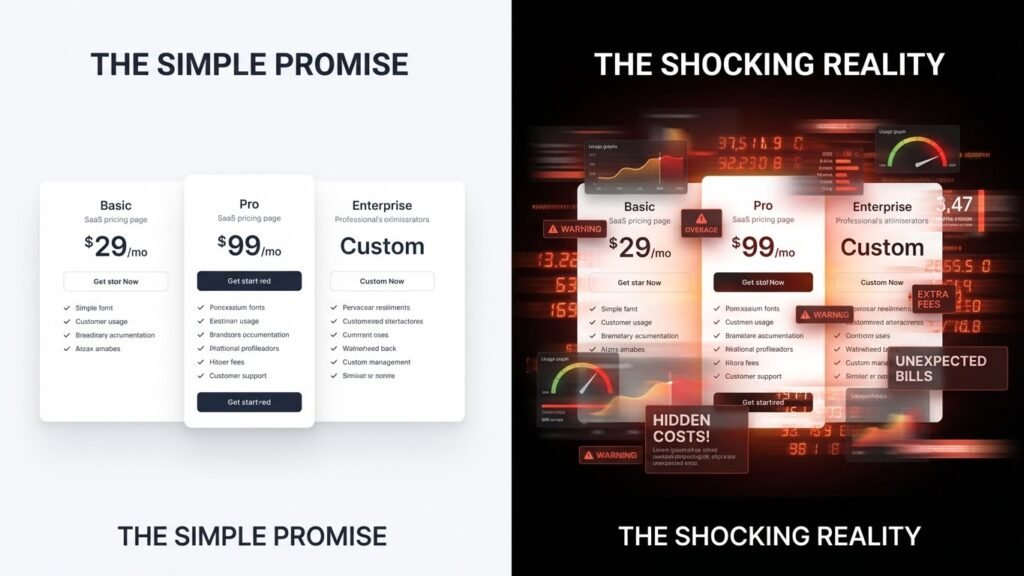
Most pricing pages look simple. They aren’t.
Per-Task or Per-Action Pricing
This is the most common model, especially among no-code tools.
Every trigger.
Every filter.
Every API call.
Every AI prompt.
They all count.
At first, this feels affordable. Then workflows grow. Logic branches. Error handling is added. Suddenly a single automation consumes dozens—or hundreds—of actions per run.
The bill doesn’t explode all at once. It just… inches upward.
Per-Workflow or Per-Run Pricing
Some platforms charge based on executions rather than steps.
This feels calmer. More predictable.
Until you realize you’re paying for capacity whether workflows run or not.
Great for stable volume. Risky for experimentation.
Per-Seat Pricing
Enterprise tools love this model.
You pay for builders or users, not usage—at least on paper. In practice, execution limits and AI credits often sit underneath, waiting to be exceeded.
Seats are cheap. Overages are not.
AI Usage Credits (The Quiet Multiplier)
AI-powered automations introduce a new variable: consumption-based intelligence.
Every LLM call, classification, or agent decision pulls from a credit pool. In testing, costs feel trivial. In production, they compound quietly—especially in workflows that run continuously.
This is where many budgets go off-script.
What Popular AI Automation Platforms Cost in the Real World

Forget the feature lists. Here’s how costs behave once humans actually use these tools.
Entry-Level Platforms: Solo Users & Small Teams
Typical range: $20–$50/month
These tools shine when automations are simple and volume is low.
They’re perfect for:
- Admin cleanup
- Lead routing
- Basic notifications
They struggle when workflows sprawl.
Once you chain actions together—or add AI—the cost curve bends sharply upward.
Who wins here:
Solopreneurs, creators, and early founders replacing manual tasks they personally feel every day.
Mid-Market Platforms: Growing Teams
Typical range: $100–$500/month
This is where automation becomes operational.
- Better logging
- Stronger reliability
- Team collaboration
But it’s also where AI usage starts showing up as a meaningful line item. At this tier, the platform can absolutely pay off—but only if automation replaces real human hours, not hypothetical ones.
Who wins here:
Agencies, marketing teams, ops managers trying to scale without hiring linearly.
Enterprise Automation Platforms
Typical range: Custom contracts, often five to six figures annually
These platforms trade flexibility for control.
- Governance
- Security
- Compliance
- Support
They’re powerful. They’re expensive. And once embedded, they’re hard to leave.
Who wins here:
Large organizations modernizing legacy workflows where failure is more expensive than cost.
What Users Praise (And What They Quietly Regret)

Across reviews, forums, and private communities, the same themes surface again and again.
What People Love
- The moment automation finally “clicks”
- Fewer manual mistakes
- Systems running without constant supervision
What People Don’t Expect
- Setup takes longer than promised
- Pricing math is harder than it looks
- Maintenance never truly ends
- AI usage costs grow slowly… then suddenly
Most regret isn’t about the platform itself.
It’s about choosing a pricing model that didn’t match how the business actually operates.
The Hidden Costs That Rarely Make It Into Reviews
This is where optimism meets reality.
Usage Spikes
Automations don’t fire once. They fire every time something changes. A viral campaign. A busy week. A data sync gone wrong. Volume multiplies before anyone notices.
Maintenance Is a Cost, Too
APIs change. Tokens expire. Apps update.
Someone must own the automation—or it silently stops working.
Time-to-Value Friction
The hours spent designing, testing, fixing, and rebuilding workflows aren’t free. They’re just unbilled.
Integration Throttles
Lower tiers often cap API calls or slow execution. The result? Forced upgrades that feel sudden but were always inevitable.
Which AI Automation Platforms Actually Pay Off

The answer depends less on features and more on fit.
Best for Non-Technical Users
Look for:
- Visual builders
- Strong templates
- Transparent limits
These tools succeed when clarity beats control.
Best for Developers and Custom Logic
Look for:
- Code-first flexibility
- Open-source or self-hosted options
- Infrastructure-based pricing
These platforms reward teams who want predictability and ownership.
Where ROI Shows Up Fastest
Automation pays for itself when:
- A task runs daily or weekly
- Errors are costly
- Volume is predictable
- The automation replaces real labor
If the task is optional, the ROI usually is too.
The Questions People Actually Ask Themselves
“Are AI automation tools worth the cost?”
They are—when automation replaces ongoing human effort instead of creating new complexity.
“Why does my bill keep going up?”
Because workflows evolve, volume grows, and AI calls multiply in the background.
“What’s the cheapest long-term option?”
Often developer-first or self-hosted platforms—if you’re willing to trade convenience for control.
Products / Tools / Resources
If you’re evaluating or already using AI automation platforms, these resources are commonly part of serious stacks:
- Zapier / Make – Popular no-code workflow automation tools with extensive integrations
- n8n – Open-source automation for teams that want control and predictable costs
- UiPath / Automation Anywhere – Enterprise-grade RPA platforms for large-scale operations
- Power Automate – Microsoft-centric automation deeply integrated with the Microsoft ecosystem
- OpenAI / Claude / Gemini APIs – Powering AI-driven logic, classification, and agents inside workflows
- API Monitoring Tools – Critical for tracking failures, throttles, and silent breaks in automation
Choosing the right tool isn’t about finding the cheapest price on day one.
It’s about understanding how cost behaves once automation becomes real—and deciding, with eyes open, whether the leverage is worth it.


